Discover Purim: A Personal Look at History and Traditions

Purim, Fate, and a Roll of the Dice
On March 2, 2026, it will be Purim — a holiday of costumes and joy commemorating how the Jewish people were saved long ago from an evil Persian vizier.
This year, the holiday feels oddly tied to Iran and the threat of war. That connection pulls me back to my very first Purim.
My First Purim in Israel
In 1991, Israel had just come through the Gulf War. On the evening news, journalists showed young people celebrating in the streets — dressed in costumes but still clutching the gas-mask boxes we had carried for weeks. The reporter asked why, almost mockingly. Their answer would have been mine too: the war was over… but how could anyone be completely sure?
I had never heard of Purim before moving to Israel in November 1990. I was told it was a joyful day — something like Mardi Gras or Halloween — full of parades, costumes, and celebration.
But that year was different. Schools were just reopening, the streets were quiet, and my first Purim mostly involved tasting triangular cookies called oznei Haman (“Haman’s ears”) or, in Yiddish, hamantaschen (“Haman’s pockets”). These little pastries, filled with poppy seeds, jam, or chocolate, were my first tangible introduction to a holiday about survival, courage, and the roll of the dice.
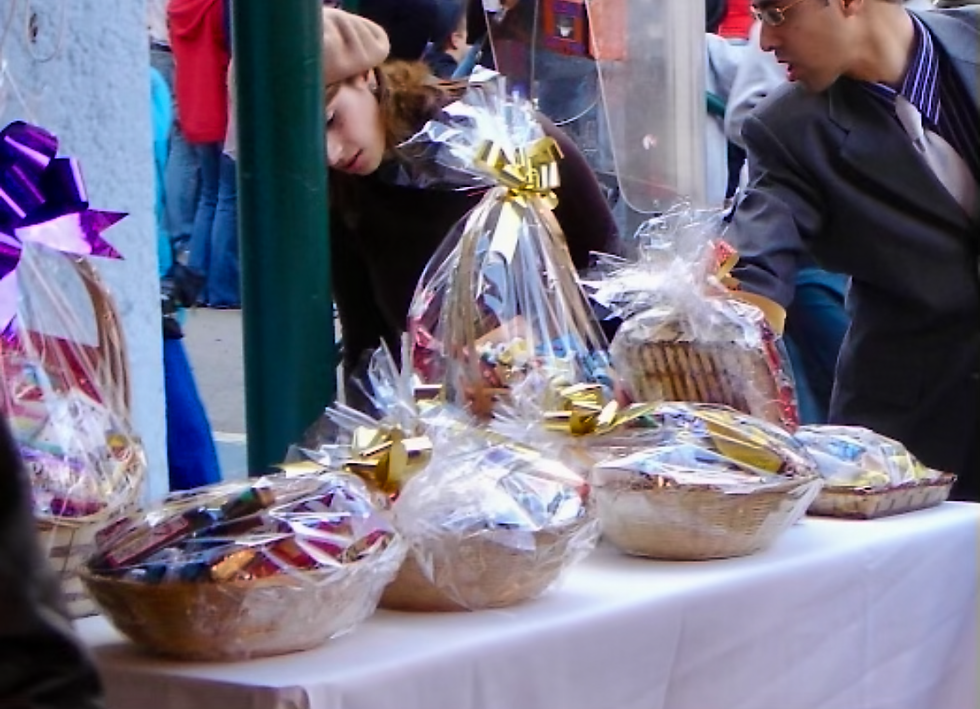
I experienced Purim not in a book but in my in-laws’ kitchen, helping prepare the traditional gift baskets — mishloach manot — for friends, family, and originally the poor. That’s where I first heard about Esther, Haman, and Mordecai.
The Story of Esther: The Roots of Purim History
Purim celebrates the moment Queen Esther saved the Jews of Persia. That’s the short version. The longer one is darker, closer to Game of Thrones than to a children’s tale.
The story is set in Persia about 2,500 years ago under King Xerxes I — in Hebrew, Akhashverosh. Angry with his wife, he sought a new queen. Young women from across the kingdom were brought to the royal harem, including a beautiful Jewish orphan named Hadassah, raised by her cousin — perhaps uncle — Mordecai.
Mordecai was ambitious. He had once saved the king and gained some access to the palace, but clearly felt he deserved far more. The king’s search for a new wife was his opportunity: if the new queen were family, he would practically own the place. Young, beautiful, and obedient Hadassah was the perfect pawn.
Knowing the king disliked the Jews, Mordecai told her to hide her identity. She entered the court as Ishtar — in Hebrew, Esther. The king chose her, of course. We don’t know if she was happy, but I can imagine Mordecai rubbing his hands in quiet delight, already plotting his next moves through the palace.
Trouble in the Palace
Trouble began when Mordecai refused to bow to the king’s chief adviser, Haman. Two big egos, if you ask me. Offended, Haman demanded to know why Mordecai would not bow like everyone else. Mordecai replied that, as a Jew, he bowed only to God.
Enraged, Haman decided not only to punish — indeed, to kill — Mordecai, but to annihilate his entire people. To choose the date of the massacre, he cast lots (pur, meaning “lot” or dice). From this comes the holiday’s name: Purim.
Mordecai soon heard of the plan and knew that only Esther — beloved by the king yet secretly Jewish — could save the day. But doing so meant revealing who she truly was.
Frightened but aware of her responsibility, Esther asked the Jews to fast and pray with her for three days. Then she acted. Whether she arranged a banquet or appeared uninvited before the king, the result was the same: she revealed both her identity and Haman’s plot.
The king could have killed her for such audacity, but instead he listened. Haman’s scheme collapsed. He was executed on the gallows — along with his ten adult sons — on the very structure he had built for Mordecai. The Jews were saved.
For the romantics among you, love won. ^_^
A happy ending — but the story is one of fear, violence, survival, and a woman who saved her people and changed history.
Lessons, Fate, and Reflection
My father-in-law liked to say that Purim is a cautionary tale about gambling. I have to admit, that idea never made complete sense to me. Haman’s plan was certain — only the day itself was left to chance.
Some say that all the events — from the king’s anger at his first wife, to Esther’s selection, to Mordecai overhearing the plot, and yes, even the roll of the dice — were part of God’s plan, even though He is never mentioned in the story. Everything, apparently, unfolded exactly as it was meant to.
As an atheist, I still find that a bit far-fetched. And yet, I can’t help thinking about how chance — or fate — showed up in my own life:
A summer job in Paris
Meeting Israelis and learning Hebrew
Meeting my Hebrew teacher (who became my husband)
Eventually moving to Israel, where his parents insisted I become Jewish
Fate? Or just a very strange roll of the dice? Who knows. I’m sure you can think of your own coincidences. ^_^
Purim On The Day
On a “regular” Purim, the streets fill with people of all ages in costume. Traditionally, girls dress as Esther and boys as Mordecai. Families exchange mishloach manot (gift baskets), and everyone enjoys oznei Haman (triangular pastries).
Purim costumes have gradually stepped away from the Esther story, growing more imaginative and playful over time, especially in cities like Tel Aviv.
For the religious, Purim eve is marked by fasting, echoing Esther’s actions. On the holiday itself, the Book of Esther is read aloud in synagogue, while children whirl noisemakers whenever Haman’s name is mentioned.
A Modern Echo
In 1991, some people were shouting a very different name — not Haman: Saddam Hussein.
And today, as Purim approaches again, the story from long ago still feels relevant to modern history. I wonder whose name will be shouted this time.
Streets of Israel on Purim. Streets of Israel on Purim: kids as Queen Esther and Mordecai, teen in playful costume.
Streets of Israel on Purim: kids as Queen Esther and Mordecai, teens in playful costumes, and of course, the school parades.


Comments